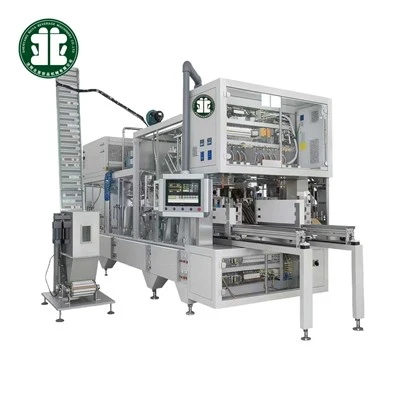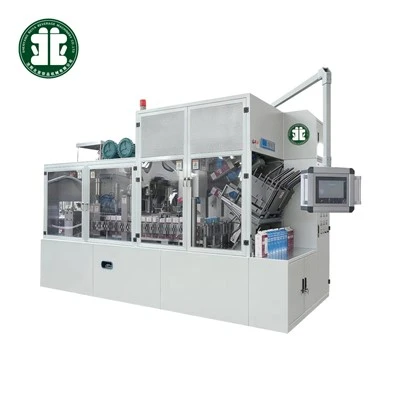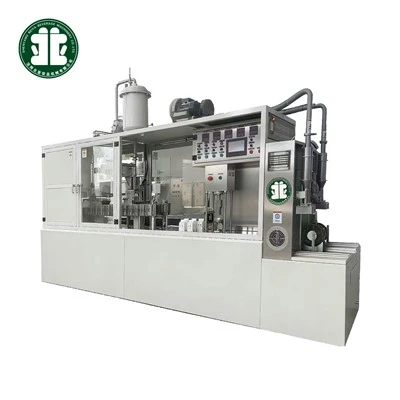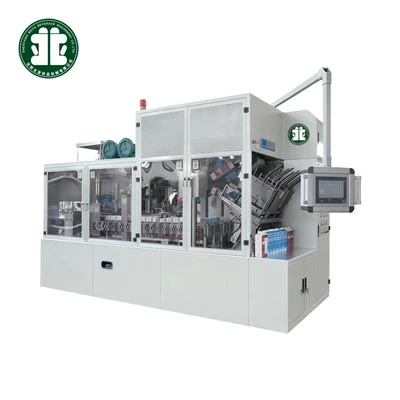

In pet food production, bag filling machines are primarily used to precisely and quantitatively fill dry or semi-moist pet food, snacks, and other products into composite material bags or stand-up pouches, achieving automated and efficient packaging. Their core features include high-precision metering, multi-size compatibility, excellent sealing, and seamless integration with upstream and downstream processes. The equipment typically integrates weighing sensors, a servo control system, and an intelligent human-machine interface, supporting stable conveying and quantitative control of various materials (such as granules, powders, and lumps). It features moisture-proof, leak-proof, and contamination-proof functions, meeting the hygiene and shelf-life requirements of pet food.
Application areas cover pet staple food, functional snacks, freeze-dried foods, and prescription pet food, and are widely used in large-scale pet food production enterprises. A typical application case is a leading domestic pet food company that introduced a fully automated bag filling line for the packaging of 50,000 tons of complete pet food annually. This system adopts a modular design, supports flexible switching within the range of 50–1000 grams, achieves a filling accuracy of ±1%, and can operate at a speed of up to 80 bags per minute. By integrating visual inspection and automatic rejection devices, damaged bags and sealing defects are effectively identified, reducing the defect rate to below 0.3%.
The core value lies in improving packaging efficiency, ensuring product consistency and traceability, while reducing manual intervention and material waste. Success factors include precise metering algorithms, dynamic compensation technology, and an intelligent manufacturing architecture linked to a central control system. Leveraging its self-developed filling parameter database and remote operation and maintenance platform, the company achieves real-time equipment status monitoring and fault early warning, significantly reducing downtime and supporting continuous capacity release. This case study demonstrates the company's core technological capabilities in the high-end food equipment field, encompassing integrated solutions for mechanical design, automation control, and data management, driving the evolution of pet food packaging towards intelligence and standardization.