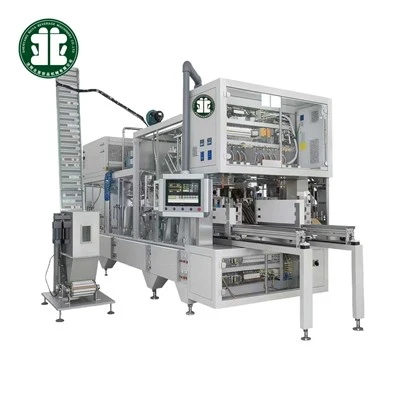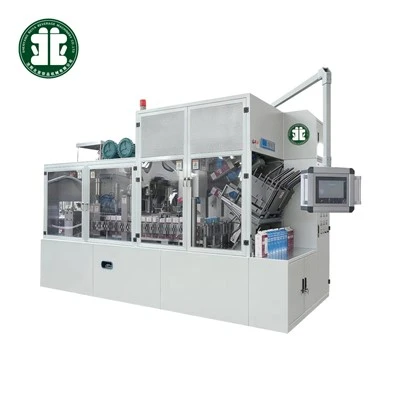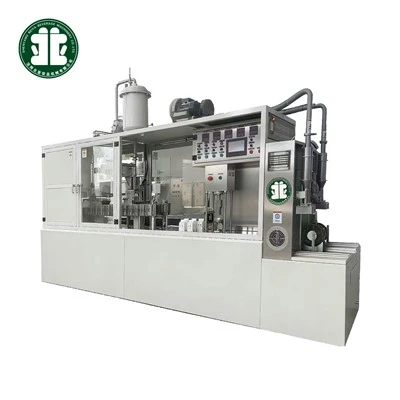

High-Temperature Pretreatment: The Battle Before Filling
The hot-filling process begins with rigorous preheating of both the material and the container. The filling machine first sends the empty bottle into a steam tunnel at 85-95℃ for 10-15 seconds for sterilization, while the material is maintained at 88-93℃ in an insulated tank to maintain fluidity. This stage is like 'warming up' the food, eliminating potential microbial risks and preventing container deformation caused by subsequent temperature differences.
Dynamic Filling: Millimeter-Level Temperature Game
Thermostatic Conveying: As the material passes through 316 stainless steel pipes, an outer steam jacket maintains temperature fluctuations ≤1℃.
Quantitative Filling: Electronic flowmeters control the error within ±0.5ml, and the filling nozzle is 3cm away from the bottle mouth to reduce oxidation.
Waste Gas Recovery: An exhaust device immediately removes hot steam from the bottle to prevent droplet splashing from affecting the seal.
Immediately after filling, a three-stage cooling process begins: first, a 5-minute spray with 60℃ warm water balances the internal and external pressures; then, a 25℃ cold air circulation system shapes the bottle; finally, an ice-water bath rapidly lowers the temperature to 4℃. This gradient cooling method reduces energy consumption by 30% compared to direct refrigeration and also avoids the phenomenon of glass bottles 'cold explosion'.