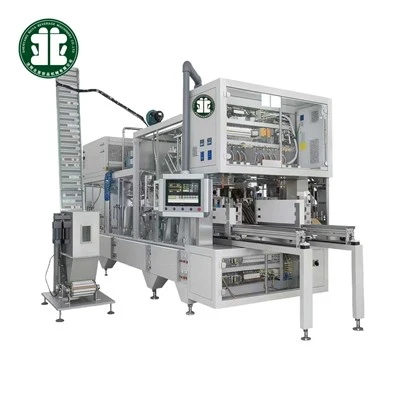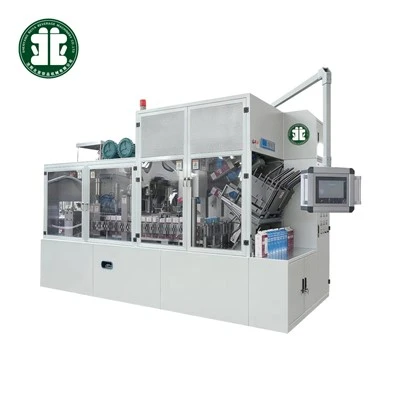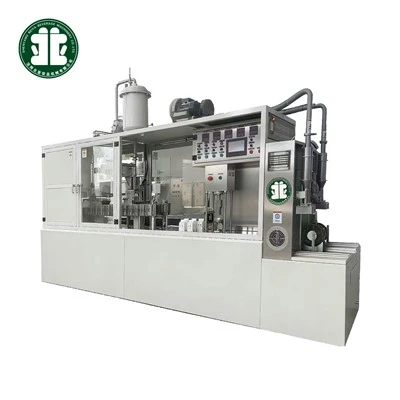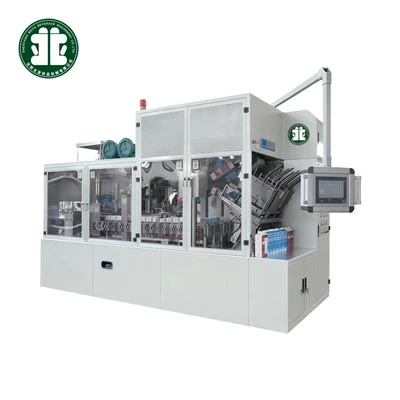

Gable-top boxes are cardboard packaging boxes with a gable-shaped design. Their structure includes multiple layers of composite film: an outer plastic film, a middle fiber layer, and an inner layer that can be either an airtight paper layer or an aluminum foil layer, depending on the filling process. They are categorized into cold-fill and hot-fill types based on the filling process: cold-fill products use a paper liner and have a shelf life of 7-30 days; hot-fill products use an aluminum foil liner and have a shelf life of 3 months to 1 year. The sterilization temperature, filling requirements, and sealing methods differ between cold-fill and hot-fill cardboard boxes, and the sterilization methods for the product contents also differ. Depending on the filling machine's technical parameters, cold-fill temperatures are typically 2-5°C, while hot-fill temperatures can reach 88-92°C.
Tetra Laval holds a patent (AU8410498A) for its octahedral gable-top box design.
In terms of opening design, due to the development of adhesives in 1955, the gable box featured an easy-to-tear spout design; in 1991, a rotating cap was added to facilitate resealing after opening [23]. Japan also developed the SchoolPOP design that does not require a straw, which improved the lower part of the gable mold to facilitate finger insertion for opening, aiming to reduce the use of plastic. These designs not only improve convenience but also reflect the concept of environmental protection.