
China Body Cream Filler: How to Choose the Right Machine for Thick Creams and Lotions
Body cream is one of the most difficult products to fill accurately. It is thick, airy, temperature-sensitive, and often sold in premium packaging where a single drip on the bottle shoulder is a quality complaint. That is why so many cosmetic brands, contract manufacturers and private-label startups end up searching for a China body cream filler - the combination of mature machine-building capability and competitive pricing is hard to match elsewhere.
But "body cream filler" is not one machine. It is a family of filling systems that behave very differently once you put real product into the hopper. This guide explains which type fits which product, what specifications to demand in a quotation, realistic price ranges from Chinese factories in 2026, and how to verify a supplier before you wire a deposit.
Why body cream is harder to fill than water or juice
Before comparing machines, it helps to understand what the product does to a filling system.
High viscosity (20,000–150,000 cP). Body cream, body butter and thick lotions do not flow on their own. They need pressure, a large-bore path, and often a heated or jacketed hopper.
Air entrapment. Creams are whipped or aerated during mixing. If the filler pulls product too aggressively, you fill volume with air instead of product, and weights drift.
Shear sensitivity. Some formulas (especially those with carbomer or natural butters) change texture when pumped too hard or too fast.
Temperature sensitivity. A cream that fills beautifully at 25 °C may become unpumpable at 18 °C in an unheated workshop in winter.
Drip and stringing. Thick products tend to string from the nozzle. Without a suck-back or cut-off nozzle, you get product on the container rim - and a failed seal.
A filler that ignores these four issues will pass a water test in the factory and fail in your production hall. Always insist on a test with your actual product, or at least a viscosity-matched sample.
The five types of body cream filler you will find in China
1. Semi-automatic piston filler
A single or double-head volumetric piston filler with a foot pedal or manual tray positioning. The operator places the jar, the machine doses, the operator removes it.
Best for: startups, small batches, 500–3,000 units/day, multi-SKU private label
Viscosity range: up to ~100,000 cP with a large-bore piston
Accuracy: roughly ±1% of fill volume
Typical price from China: USD 2,500–8,000
2. Automatic linear piston filler
Containers move on a conveyor; 4–12 piston heads dose in a row, followed by optional capping and labeling.
Best for: 3,000–15,000 units/day, 50–500 ml jars and tubes
Accuracy: ±0.5–1%
Typical price: USD 15,000–40,000 depending on heads, capping and labeling integration
3. Rotary servo-driven filler
A carousel with servo pistons and cam-driven nozzle lift. Higher speed, smoother motion, better drip control, easier recipe recall for multiple SKUs.
Best for: 15,000–60,000 units/day, premium brands, multiple pack sizes
Accuracy: ±0.3–0.5%
Typical price: USD 45,000–120,000
4. Net-weight (weighing) filler
Each container is weighed during filling and the dose is corrected in real time. The most accurate option for very high viscosity or high-value products.
Best for: body butter in large 200–500 ml jars, high-value formulas, variable density
Accuracy: ±0.1–0.2 g
Typical price: USD 30,000–90,000
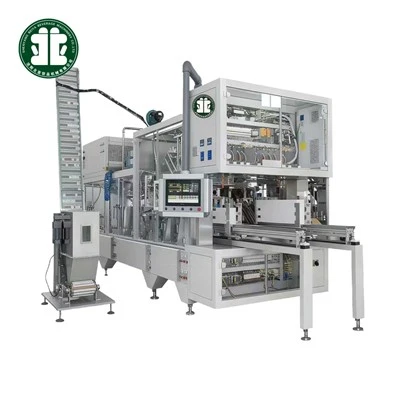
5. Gable-top carton lotion filler
A specialized line that forms, fills and seals cartons for lotion and cream products - the same platform used for milk and juice, adapted with a large-bore filling nozzle and product-temperature control. It is the lowest-cost-per-unit packaging route for high-volume body lotion.
Best for: 1,000–10,000 cartons/hour, 200–1,000 ml, single-use or refill formats
Typical price: USD 60,000–150,000 for a complete line
If your packaging is a carton rather than a jar or tube, see our gable top lotion filling machines - the engineering requirements are quite different from jar filling.
OEM factory or trading company? How to tell in ten minutes
Most "China body cream filler suppliers" you find on B2B platforms are trading companies. That is not automatically bad - but you should know which one you are talking to, because it determines who supports you when a piston seal fails two years later.
Quick checks:
Ask for the business license and the factory address, then look up the address on a map. A trading company will give you a office address in a commercial building.
Ask for a live video walk-through, not a pre-recorded clip. Ask the engineer to open a specific machine's electrical cabinet on camera.
Ask what they manufacture in-house. Good factories are specific: "we machine the pistons and frames here, we buy Siemens PLC and SMC pneumatics." Vague answers are a warning sign.
Ask for the CE certificate number and the testing lab. Then verify it.
Ask for two customers in your region who bought the same model. A factory with export experience will have them.
A real manufacturer will also push back on unrealistic requests - for example, refusing to promise ±0.2% accuracy on a 100,000 cP butter with a standard piston filler. That pushback is a good sign.
Specifications to demand in every quotation
Do not accept a quote that only says "body cream filling machine, 30 bottles per minute." Ask for these numbers in writing:
|
Item |
What to ask |
Why it matters |
|
Fill range |
e.g. 50–500 ml per head |
Determines whether one machine covers your whole SKU range |
|
Accuracy |
±% of volume, at what viscosity |
Accuracy claims are meaningless without the product viscosity |
|
Output |
units/min at a stated fill size |
Output drops as fill volume rises |
|
Product contact material |
316L stainless steel, FDA-compliant seals |
Cosmetic products often require documented material certificates |
|
Hopper |
capacity, jacketed or not, agitation |
Thick cream needs a heated or stirred hopper |
|
Nozzle type |
suck-back / cut-off / diving |
Directly affects drip and seal quality |
|
Cleaning |
CIP or manual, disassembly time |
Changeover time decides your real capacity |
|
Changeover |
minutes between two SKUs |
Critical for multi-SKU private label |
|
Control |
PLC brand, recipe memory, HMI language |
Affects operator training and spare parts |
|
Air & power |
consumption, pressure, voltage |
Many Chinese machines are built for 380V/50Hz - confirm your site supply |
Also request the FAT (factory acceptance test) protocol in advance, so you both agree on what "passed" means.
What does a China body cream filler cost in 2026?
Indicative ranges, ex-works, for standard stainless steel construction:
Semi-automatic single-head piston filler: USD 2,500–8,000
Automatic linear filler with 6–8 heads: USD 15,000–40,000
Rotary servo filler: USD 45,000–120,000
Net-weight filler: USD 30,000–90,000
Gable-top carton lotion line: USD 60,000–150,000
Price moves with head count, servo versus pneumatic drives, jacketed hoppers, CIP, capping integration, and the documentation package (material certificates, IQ/OQ documents, CE file). A 30% cheaper quote usually means pneumatic drives instead of servo, 304 instead of 316L contact parts, or a smaller hopper - ask which.
Lead time, shipping and after-sales
Lead time: 30–45 days for semi-automatic units, 45–75 days for automatic lines, longer if custom tooling for unusual jars is required.
Shipping: LCL is common for single machines; a 20ft container fits most linear lines. Ask for wooden-case packing with moisture barrier - sea freight to Europe or South America takes 30–45 days.
Spare parts: require a recommended two-year spare parts list with prices at order time. Seals, nozzles and piston rings are the parts you will actually need.
Support: confirm whether installation supervision and operator training are included, and whether remote support is available in your time zone.
FAQ
What is the best filler for thick body cream? For viscosities above 50,000 cP, a large-bore piston filler with a jacketed, agitated hopper and a suck-back nozzle is the usual choice. For very high-value products where a 1-gram overfill is expensive, a net-weight filler is more accurate.
Can a body cream filler also fill lotion and shampoo? Yes, within its viscosity and fill-range limits. A piston filler with recipe memory can usually handle lotion, cream, shampoo and gel - but you must verify nozzle and hopper suitability for the thinnest product, not just the thickest.
How accurate is a Chinese body cream filler? Standard piston fillers achieve ±0.5–1% of fill volume; servo rotary fillers ±0.3–0.5%; net-weight fillers ±0.1–0.2 g. These figures apply to a properly matched product and nozzle, which is why a product test matters more than the datasheet.
What is the minimum order quantity? Most Chinese factories sell a single machine. Custom tooling for an unusual jar size may carry a minimum tooling charge but is rarely a volume commitment.
Do I need a fully automatic line?
Only if your volume justifies it. Below roughly 3,000 units per day, a semi-automatic filler plus manual capping is often more economical, and it keeps capital free for packaging and marketing.
Can you fill body cream into cartons instead of jars? Yes. Gable-top carton lines are used for body lotion and cream in 200–1,000 ml formats, with a large-bore nozzle and temperature-controlled product path. It is the lowest packaging cost per unit at high volume.
Next step
If you are evaluating a China body cream filler, the fastest way to a reliable answer is a test with your own product. Send us your cream's viscosity, fill volume, target output and container drawing - we will tell you which filling principle fits, and what it will cost, before you commit to anything.
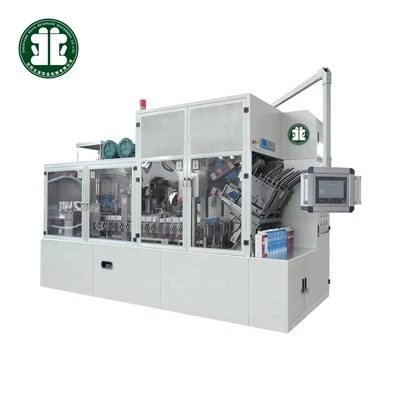
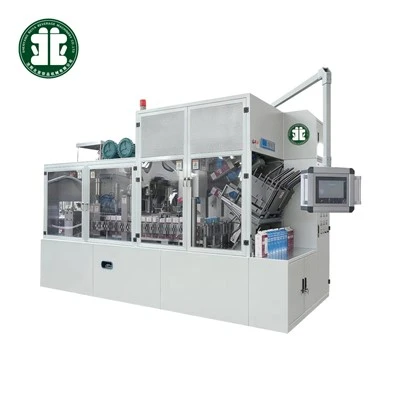
Body cream filler - machine overview and specifications
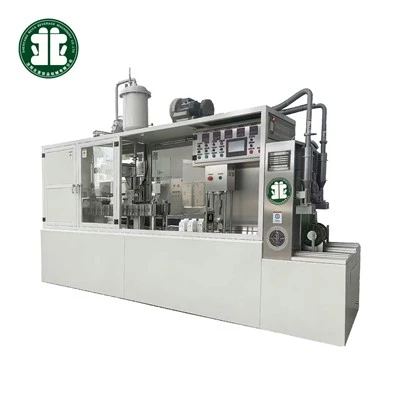
Cream filling machine - for medium-viscosity creams
Request a quote - include your product SDS or viscosity data