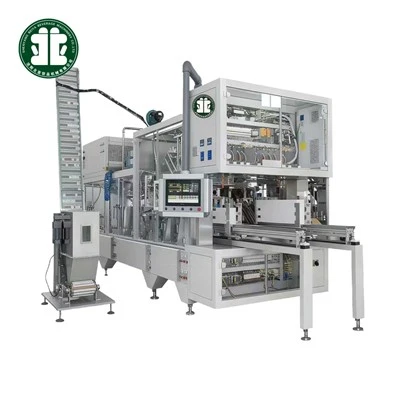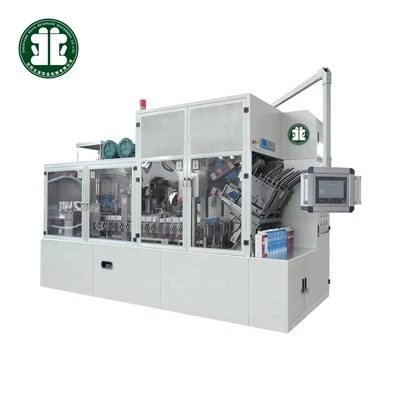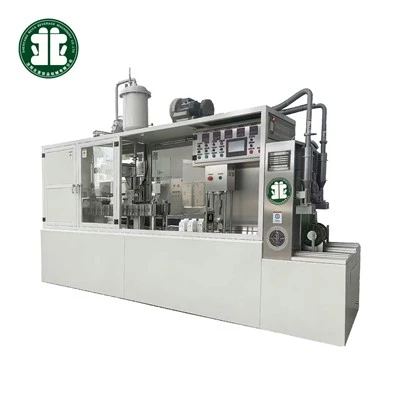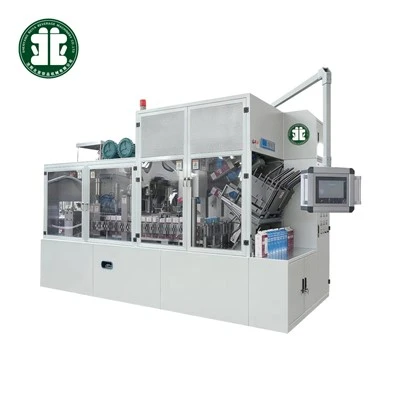

Selecting a gable top carton filling machine is one of the most important investments a dairy or beverage producer will make. The right machine runs reliably for a decade; the wrong one becomes a constant source of downtime and waste. After more than 20 years of manufacturing gable top carton filling equipment, we have summarized the five key factors every buyer should evaluate.
1. Match the Machine to Your Product - Not the Other Way Around
Gable top cartons are used for far more than milk today: drinking water, edible oil, fruit juice, cream, lotion, even shampoo and powder products. Each product has different viscosity, density, and foaming characteristics, which directly affect the filling method:
Low-viscosity liquids (milk, water, juice): atmospheric or gravity filling works well
Viscous products (cream, shampoo, lotion): piston or pump filling with heated pathways is required
Granule-mixed products (rice milk, yogurt with fruit): special agitating tanks and enlarged nozzles prevent clogging
Powder products: auger (screw) dosing systems instead of liquid nozzles
Before requesting a quotation, prepare accurate product specifications: viscosity, filling temperature, whether the product is aseptic or hot-filled, and required shelf life. A reliable manufacturer will ask for samples before confirming a solution.
2. Calculate Your Real Capacity Requirement
A common mistake is buying capacity you don't need. Consider not only today's output but also:
Current demand: bottles or cartons per hour (e.g., 2,000 / 4,500 / 9,000 packs per hour are typical ranges)
Seasonal peaks and planned expansion
Changeover frequency between carton sizes (250 ml to 1,000 ml)
Semi-automatic machines suit startups and small batches; fully automatic lines pay off when daily volume exceeds roughly 8-10 hours of continuous production.
3. Automation Level and Labor Cost
A fully automatic gable top machine integrates carton forming, bottom sealing, filling, top sealing, and date printing into one line, requiring 1-2 operators. Semi-automatic models need more manual handling but cost significantly less and are easier to maintain - ideal for emerging markets or pilot production.
4. Aseptic Capability and Shelf Life Requirements
If your product needs ambient-temperature distribution (common for plant-based drinks and UHT products in tropical markets), an aseptic filling system is essential. If your product is pasteurized and cold-chain distributed, a standard fresh-fill system is more cost-effective. Confirm which sterilization method the machine supports: H₂O₂, peracetic acid, or UV.
5. After-Sales Support Is Part of the Machine
International buyers should ask three questions before signing:
Is remote video debugging and operator training included?
How fast are spare parts shipped, and are they compatible with standard carton suppliers?
Can the supplier provide references from customers in a similar climate and market?
A machine is only as good as the service behind it. At Shenyang Beiya, every export machine ships with a full commissioning checklist, spare parts package, and lifetime remote technical support.
Conclusion
The best filling machine is not the most advanced one - it is the one that matches your product, your volume, and your team. Prepare your product data, compare solutions based on total cost over five years rather than purchase price, and choose a manufacturer with proven experience in your exact application.